Earlier I had mentioned something about legacy, what we leave behind. The other day I was thinking about what a unique time this is in human history. In fact, I believe we’re at something of an apex.
Ancient times had the oral tradition, pictures on caves, the memory. Time was recorded this way. It’s all they had. Stories were passed along, history remembered, loved ones recalled. But it was all just memory. Nothing as tangible as a photograph, a home movie, a phonograph record, Facebook, Twitter, WordPress, etc., etc., etc…
In fact, our memory as we know it certainly has those ancient times to thank for its development and the patterns (and neurosis) that still exist today. And certainly our technology was inspired by those early cave paintings and stories around the campfire. Just as someone thought that it’d be easier to haul things with a wheel, I’m sure some early caveman thought it’d be cool if the drawing of the elk scrawled across the cave wall moved.
The thing about our current technology is that it’s like those that have passed on are still actually among us. Our ancient elders felt the spirits of their loved ones, as some of us do today, but as we’ve evolved as a species, so have our mediums of remembrance.
In earlier times, the wealthy had their portraits painted, then movie stars lived on in their films, authors persisted in their novels and those that made the local news were written about in what would become a yellowed newspaper tucked away in an attic.
Today, so many have access to a printing press, movie camera, recording studio – all in the palms of their hands. And we can record ourselves and loved ones for posterity and “post it” into the “cloud” for eternity.
Right?
Woody Allen recently said in Esquire:
“It’s just an accident that we happen to be on earth, enjoying our silly little moments, distracting ourselves as often as possible so we don’t have to really face up to the fact that, you know, we’re just temporary people with a very short time in a universe that will eventually be completely gone. And everything that you value, whether it’s Shakespeare, Beethoven, da Vinci, or whatever, will be gone. The earth will be gone. The sun will be gone. There’ll be nothing. The best you can do to get through life is distraction. Love works as a distraction. And work works as a distraction. You can distract yourself a billion different ways. But the key is to distract yourself.”
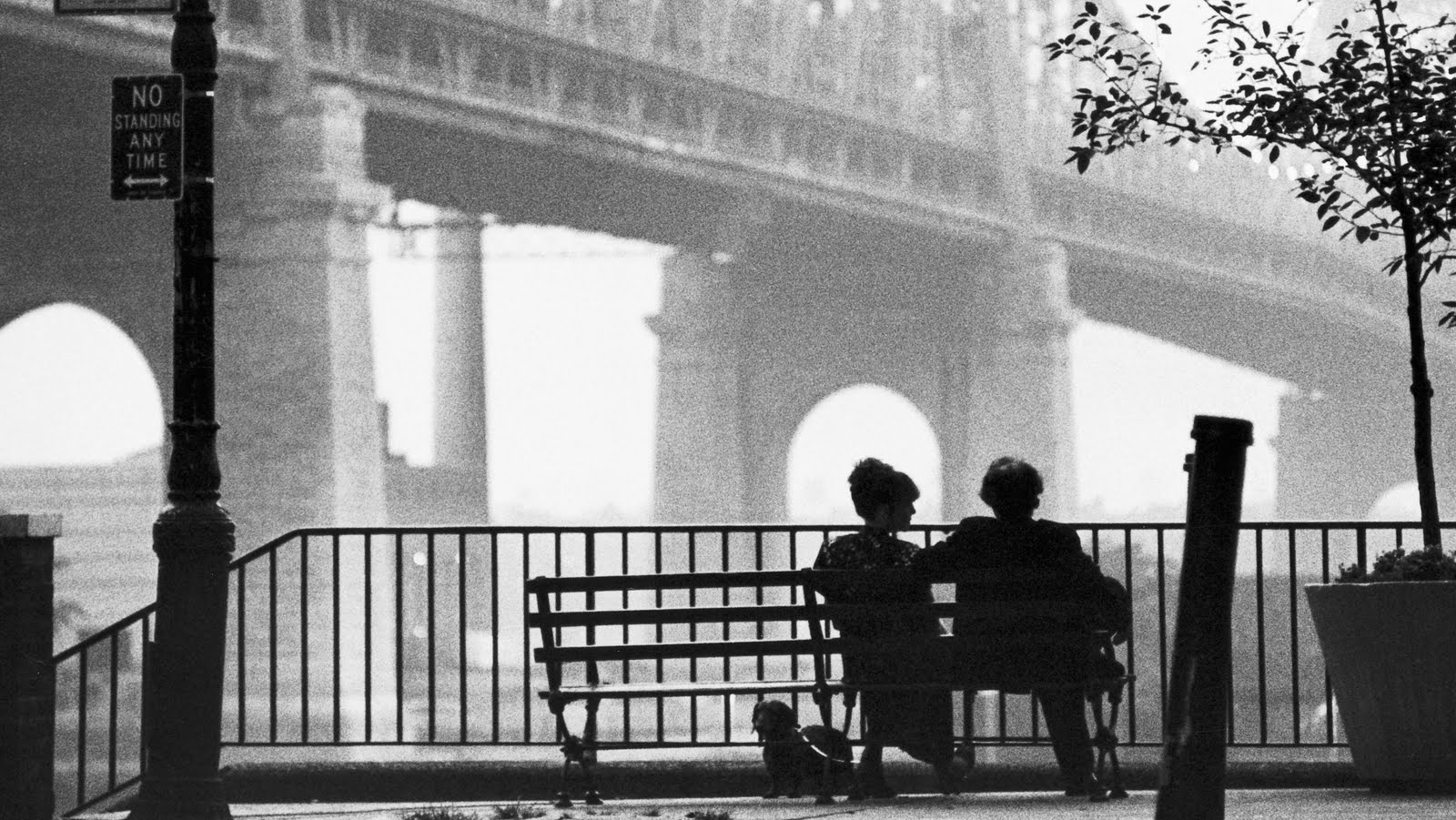
And though this certainly wasn’t the first time, Woody was actually paraphrasing something he said in an interview with France 24 in 2010:
“You start to think, when you’re younger, how important everything is and how things have to go right—your job, your career, your life, your choices, and all of that. Then, after a while, you start to realise that – I’m talking the big picture here – eventually you die, and eventually the sun burns out and the earth is gone, and eventually all the stars and all the planets in the entire universe go, disappear, and nothing is left at all. Nothing – Shakespeare and Beethoven and Michelangelo gone. And you think to yourself that there’s a lot of noise and sound and fury – and where’s it going? It’s not going any place… Now, you can’t actually live your life like that, because if you do you just sit there and – why do anything? Why get up in the morning and do anything? So I think it’s the job of the artist to try and figure out why, given this terrible fact, you want to go on living.”
And that’s it. It’s probably very possible that it all flames out and this is a cold truth we distract ourselves from, a fact that we deny. Just as I do when I say “probably very possible” instead of just nodding my head and saying, “yep”.
And Woody is certainly right that artists (and priests and philosophers and scientists among others) try to figure out why. But does this distraction underlined by an illusion of permanence persist from generation to generation just because the truth is uncomfortable or is it possible that it’s not the truth?
It certainly seems that the most sensible thing is that a Big Flame Out is in the (hopefully very distant) future. But how much sense does it make that we’re even here in the first place? For that matter, how much sense does it make that there ever even was a Beethoven or DaVinci or Woody Allen?
Why?
The scientific answer to “why” often has some sort of response that goes along with evolution. Our anxiety is rooted in the flight or fight responses when we were going toe to toe with the animals at the Dawn of Civilization, the hair on our thick skulls protecting our big brains, our oft-celebrated posable thumbs – all of this to give us some kind of advantage and our bodies changed and adapted as time marched on. Our bodies, intelligent biological machines that they are, survived.
Evolution speaks very well to process, it still doesn’t answer my big “why?”. Why survive? Why persist? Well, to survive. Why? Especially if it’s all going to flame out anyway. Why music? Cave painting? Midnight in Paris?
I guess that’s the big question, but it would appear it might be the oldest as well – Not entirely dissimilar to why is grass green and the answer having something to do with chlorophyll. But my question still is why does chlorophyll create green rather than puce?
Why?
All I know for certain is that I do not know and when I think too much about The Big Flame out – whether it’s my own personal demise or the entire universe’s, I do take small solace in the distraction of the likes of Beethoven or Woody Allen…
Or Tom Petty, whose striking lyrical choice in the clip above perfectly speaks to the conflict within all of us – or at least the more hopeful.
So maybe the reason we have paintings and movies and books and such in the first place is to keep our big brains off the inevitable demise of the Universe so that we can fight or flight our antagonists so that we may survive so that our descendants can survive so that they, too, can deny their inevitable destruction.
So we persist so that we can continue to deny our eventual devastation? Maybe that’s all there is to it, but that doesn’t seem right.
Science tells us that the rocks will melt, the sea will burn and, if we’re honest with ourselves, the good old days will not return. But Petty doesn’t completely accept this and neither can I. The photographs and videos and Facebook and the looks in our children’s eyes might fool us into thinking that we last and there’s something more and maybe it’s the same inclination that made our ancestors paint pictures on caves and tell stories, but did this desire to persist come from a fruitless, hopeful denial or a distinct possibility that there’s more to it all than just what we can see? Just like when Petty says may instead of will – Is this hopeful, childlike ignorance or evidence of something we won’t fully understand until we have wings?


 C I P R I A N I
Leave a comment